
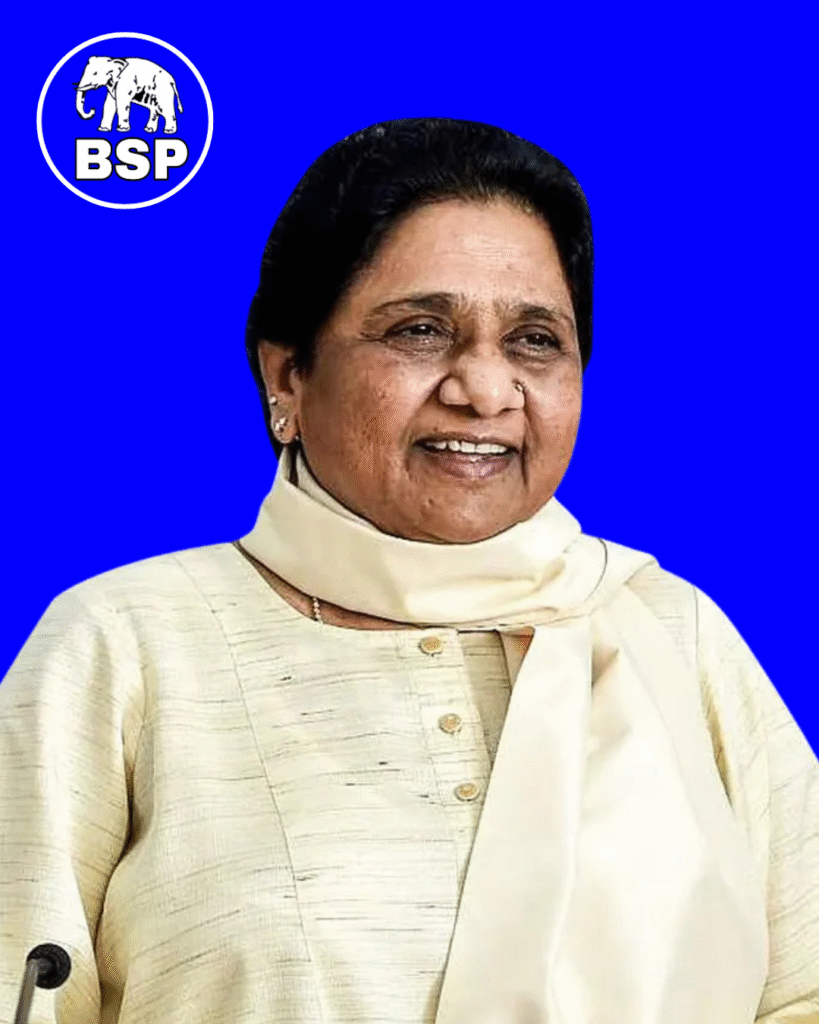
Mayawati: A Strong Voice for Social Justice & Empowerment in Indian Politics
Mayawati, one of India’s most influential political leaders, is widely respected for her unwavering dedication to social justice, equality, and empowerment of marginalized communities. As the supremo of the Bahujan Samaj Party (BSP) and the first Dalit woman Chief Minister of Uttar Pradesh, Mayawati has shaped modern Indian politics through her bold leadership and commitment to constitutional values. Her journey from humble beginnings to becoming one of the most powerful leaders in the country is an inspiring story of resilience, determination, and visionary governance.
Early Life & Education
Born on 15 January 1956 in New Delhi, Mayawati belongs to a Dalit family from Uttar Pradesh. Her father, Prabhu Das, worked in the post office, and her family prioritized education as a path to empowerment.
Mayawati completed her B.A. and B.Ed. degrees from Delhi University and later earned an LL.B. from the University of Delhi. Before entering politics, she worked as a school teacher while preparing for civil services examinations. Her life took a transformative turn when she met Kanshi Ram, founder of the Bahujan Samaj Party, who recognized her leadership potential and encouraged her to join public life.
Entry Into Politics
Mayawati entered politics in the early 1980s under the guidance of Kanshi Ram. Her powerful speeches, strong organizational skills, and deep understanding of social issues made her a natural leader within the Bahujan movement.
Over the years, she emerged as a fierce advocate for Dalits, backward classes, and marginalized communities. Her political rise showcased a significant shift in Indian politics, where socially disadvantaged groups found a strong voice through her leadership.
Becoming the Chief Minister of Uttar Pradesh
Mayawati made history when she became the Chief Minister of Uttar Pradesh for the first time in 1995, becoming the first Dalit woman to hold the state’s highest office. She went on to serve four terms as Chief Minister:
1995
1997
2002–2003
2007–2012
Her political leadership brought national attention to issues of caste discrimination, social justice, and governance reforms.
Key Achievements as Chief Minister
Mayawati’s tenure as Chief Minister is known for administrative efficiency, strict law and order measures, social welfare schemes, and large-scale infrastructure development. Some major achievements include:
1. Strong Law and Order
Mayawati’s government is widely recognized for restoring law and order in Uttar Pradesh. Her administration took strict action against criminal elements, ensuring safety and justice for common citizens.
2. Social Justice & Welfare Programs
As a champion of Dalit and marginalized communities, Mayawati launched numerous welfare initiatives, including:
Scholarships for SC/ST students
Increased reservation benefits
Policies focused on women’s safety and empowerment
Housing and pension schemes for underprivileged families
These initiatives strengthened BSP’s core support base and reshaped the state’s socio-political landscape.
3. Infrastructure Development
Mayawati emphasized large-scale infrastructure projects to modernize Uttar Pradesh, including:
Development of parks and monuments honoring Dalit icons
Road networks and bridges
Urban beautification projects
Upgradation of public facilities
Projects like Ambedkar Memorial Park and Kanshi Ram Eco Garden became symbols of Dalit pride and identity.
4. Administrative Reforms
Her governance style focused on transparency and bureaucratic discipline. She introduced reforms to streamline government functioning and reduce corruption.
Leadership of the Bahujan Samaj Party
As the national president of BSP, Mayawati transformed the party into a formidable political force with a robust organizational structure across India. Under her leadership, the BSP expanded its ideology of “Bahujan Hitay, Bahujan Sukhay” (for the upliftment and welfare of the majority).
Her leadership principles emphasize:
Constitutional values
Equality and social justice
Education-based empowerment
Representation for marginalized communities
Clean and disciplined politics
Mayawati remains one of the few leaders with a clear ideological model rooted in Ambedkarite principles.
Political Ideology & Vision
Mayawati envisions an India where:
Social inequality is eliminated
Every citizen has equal rights and opportunities
Governance is transparent and corruption-free
Marginalized communities have a strong political voice
Her political ideology is shaped by the philosophies of Dr. B.R. Ambedkar, Shahid Kanshi Ram, and the broader Dalit movement.
Public Image & Personal Values
Mayawati is known for her disciplined lifestyle, direct communication style, and strong administrative approach. She maintains a dignified public image and is often regarded as a leader who speaks for those who have traditionally been voiceless.
Her political journey continues to inspire millions belonging to marginalized backgrounds, showcasing how determination and resilience can reshape destiny.
Conclusion
Mayawati stands among India’s most influential political leaders, representing the aspirations of millions and fighting for equality, dignity, and justice. Her contributions as Chief Minister and as the face of the Bahujan Samaj Party have left a lasting impact on India’s political and social fabric. With her strong will, visionary leadership, and unwavering dedication to social empowerment, Mayawati continues to shape the future of Indian politics and remains a powerful voice for change.